
Category: Wellness With Attitude

Welcome to Wellness With Attitude, De’Lite-U’s educational series exploring everyday health with credible science, practical insights and a little humour. Discover relatable discussions on hormonal health, nutrition, gut health, stress, sleep, fitness, metabolism and healthy ageing. Real Life. Real Wellness. A Little Attitude.

  • Navigating the Storm

    Navigating the Storm

    When Life, Love and Hormones Collide — Part 3

    Wellness With Attitude | De’Lite-U

    Understanding the science behind stress is one thing.

    Remembering any of it when someone has just pushed your very last button is an entirely different skill.

    Over the course of this week’s conversation, we’ve explored the invisible pressures people carry, the biological mechanisms behind stress and emotional regulation, and the additional challenges that hormonal changes and disrupted sleep can introduce.

    Now comes the considerably less predictable part: applying that understanding to real life.

    Because knowing why we react doesn’t necessarily teach us how to respond differently.

    And unfortunately, life doesn’t come with a conveniently located reset button.

    Recognising when the conversation is no longer productive

    Picture Storm & Calm.

    It’s been a long day. Neither has slept particularly well. There are bills to pay, decisions to make and approximately seventeen other things demanding attention.

    Storm wants to talk.

    Calm wants five minutes of peace.

    Neither request is unreasonable.

    The timing, however, is spectacularly unfortunate.

    When we’re emotionally overwhelmed, it can become more difficult to listen, process information and respond thoughtfully. We may become defensive, speak impulsively or withdraw from the conversation altogether.

    Some signs that we may be reaching emotional overload include:

    • A racing heart, tense muscles or shallow breathing.
    • Feeling increasingly defensive or misunderstood.
    • Repeating the same argument without making progress.
    • Struggling to listen without preparing a counterargument.
    • Feeling an overwhelming need to escape the conversation.
    • Saying things primarily to hurt, defend or retaliate.

    These experiences aren’t exclusive to either gender, nor are they necessarily evidence of a hormonal imbalance.

    They’re worth recognising because continuing a conversation at that point may make resolution more difficult.

    Scenario 1: One person wants to talk. The other needs space.

    The familiar response:

    “I can’t deal with this right now.”

    Depending on the circumstances, this may be interpreted as dismissal, rejection or unwillingness to engage.

    An alternative:

    “I want to have this conversation properly, but I’m overwhelmed. Can we come back to it after dinner?”

    The difference is that the second response acknowledges the importance of the conversation while communicating a personal need.

    Taking a break can help reduce emotional intensity. Going for a walk, breathing slowly or spending some time in a quieter environment may help some people regain composure.

    But taking space should not become a convenient way of avoiding difficult conversations indefinitely.

    Agreeing on when to reconnect — and following through — is an important part of building trust.

    Listening without immediately trying to fix everything

    Sometimes we need to be heard, not fixed.

    Imagine someone expressing concern about their changing health, financial circumstances or emotional exhaustion.

    The person listening immediately begins suggesting solutions.

    Exercise more. Change your routine. Stop worrying. Make a plan.

    Their intentions may be entirely constructive, yet the person sharing their concerns may feel that the emotional experience itself has been overlooked.

    Scenario 2: The unsolicited solution

    The familiar response:

    “You need to stop stressing about it.”

    An alternative:

    “That sounds like a lot to carry. Would you like me to listen, or would you like us to work out what to do?”

    Acknowledging someone’s experience doesn’t mean agreeing with every interpretation of events.

    It simply communicates that their experience has been heard.

    Sometimes practical help is exactly what’s needed. At other times, emotional acknowledgement needs to come first.

    The challenge is learning to distinguish between the two.

    When frustration becomes personal

    There’s a difference between expressing dissatisfaction with someone’s behaviour and attacking their character.

    Under pressure, that distinction can become blurred.

    Scenario 3: The argument that becomes about everything

    A disagreement about an unfinished task suddenly becomes a discussion about every perceived failure in the relationship.

    Words such as always and never begin appearing.

    Past grievances are introduced.

    The original issue disappears beneath an avalanche of accumulated frustration.

    The familiar response:

    “You never support me. I have to do everything myself.”

    An alternative:

    “I’m feeling overwhelmed by what I’m carrying at the moment. I need us to discuss how we can manage these responsibilities differently.”

    The alternative doesn’t minimise the concern.

    It makes the concern more specific and creates an opportunity to discuss what might need to change.

    Of course, choosing better words doesn’t guarantee that another person will respond constructively.

    Communication is a shared responsibility, not a performance one person must perfect to prevent the other’s harmful behaviour.

    Financial pressure: when the problem isn’t each other

    Financial uncertainty can affect sleep, mental wellbeing, confidence and relationships.

    For some people, the inability to provide or maintain financial stability can become closely connected to their sense of identity and self-worth.

    Others may experience significant anxiety because they feel unable to plan, make decisions or establish a sense of security.

    Neither experience is exclusive to men or women.

    Scenario 4: The financial conversation

    The familiar response:

    “What are we going to do? Nothing is changing!”

    An alternative:

    “I’m worried about where we are financially. Can we set aside some time to look at what we know, what we don’t know and what decisions are within our control?”

    Separating the financial problem from personal blame may help make the discussion more constructive.

    It may also help to distinguish between:

    • Immediate obligations requiring attention.
    • Decisions that can reasonably be postponed.
    • Uncertainties that cannot currently be resolved.
    • Areas where independent financial or professional guidance may be useful.

    Not every financial difficulty can be solved through budgeting or positive thinking.

    Sometimes the circumstances themselves are genuinely difficult.

    Recognising that reality matters too.

    Supporting someone without losing yourself

    Empathy is valuable.

    Self-neglect is not a requirement of empathy.

    There is a difference between supporting someone through a difficult period and becoming responsible for managing their emotional state.

    Constantly monitoring another person’s mood, suppressing your own concerns or changing your behaviour to avoid an unpredictable reaction can become emotionally exhausting.

    Scenario 5: Establishing a boundary

    The familiar response:

    Remaining silent to prevent further conflict, despite feeling hurt or uncomfortable.

    An alternative:

    “I’m willing to discuss this, but I’m not willing to continue while we’re insulting one another.”

    A boundary is not necessarily a demand that another person change.

    It identifies what you are prepared to participate in and what action you may take to protect your wellbeing.

    For example:

    “I will end this conversation if the insults continue.”

    “I need some uninterrupted time to rest.”

    “I cannot take responsibility for this decision on your behalf.”

    Boundaries should not be used as threats, punishment or a means of controlling another person.

    They are most meaningful when they are clear, reasonable and consistently respected.

    When an apology isn’t enough

    All of us can respond poorly under pressure.

    Acknowledging that we have hurt someone is important, but meaningful repair generally involves more than saying sorry.

    Consider the difference between:

    “I’m sorry, but you made me angry.”

    And:

    “I’m sorry for what I said. I was frustrated, but that doesn’t justify speaking to you that way.”

    The second response accepts responsibility without transferring it to the person who was hurt.

    Where possible, meaningful repair also involves understanding the impact of the behaviour and taking steps to prevent it from becoming a recurring pattern.

    Repeated apologies without meaningful behavioural change can gradually undermine trust.

    Forgiveness, where someone chooses it, does not require them to accept repeated harm.

    Looking after our own health

    Not every difficult period is primarily a relationship problem.

    Persistent exhaustion, anxiety, irritability, disrupted sleep or changes in concentration may deserve individual attention.

    During perimenopause and menopause, discussing troublesome symptoms with an appropriately qualified healthcare professional may help identify suitable treatment and support options.

    Men experiencing persistent fatigue, low mood, changes in libido or other concerning symptoms also deserve appropriate assessment rather than assumptions about ageing or masculinity.

    Mental health conditions, sleep disorders, medication effects and other medical issues can affect wellbeing in ways that are not always immediately obvious.

    A whole-person approach may involve attention to:

    • Sleep quality and recovery.
    • Regular, adequate nutrition.
    • Physical activity appropriate to individual circumstances.
    • Medical assessment of persistent or unexplained symptoms.
    • Psychological or emotional support.
    • Financial or practical assistance where needed.
    • Time for meaningful activities, friendships and personal interests.

    This isn’t a prescription to overhaul your entire life by Monday morning.

    Adding another demanding wellness routine to an already overwhelming schedule may be counterproductive.

    Start with what is realistic, accessible and relevant to your circumstances.

    When the situation requires more than communication techniques

    It is important to distinguish ordinary relationship conflict from patterns of intimidation, coercion, manipulation or abuse.

    Threats, physical aggression, controlling behaviour, persistent humiliation and fear of another person’s reactions should not be dismissed as consequences of stress or hormonal changes.

    Biology may help explain aspects of human behaviour. It does not remove accountability.

    Where someone feels unsafe, prioritising safety and seeking confidential, specialist support is more appropriate than attempting to resolve the situation through ordinary relationship communication techniques.

    Couples counselling may be helpful in some circumstances, but it is not necessarily appropriate where coercive control or abuse is present.

    Nobody should be expected to communicate their way out of an unsafe situation.

    Faith, resilience and the courage to seek help

    For many people, faith provides a source of strength, meaning and hope during difficult periods.

    It may offer perspective when circumstances feel uncertain and comfort when answers are not immediately available.

    But resilience doesn’t require us to pretend that we are coping when we aren’t.

    Faith, professional support, medical care and practical action can coexist.

    Sometimes courage means persevering.

    Sometimes it means acknowledging that something needs to change.

    And sometimes it means accepting that we cannot carry everything alone.

    A small exercise for the week ahead

    Rather than creating another overwhelming list of things to improve, consider taking a few quiet minutes to reflect on four questions.

    What am I carrying?

    Identify the pressures currently affecting your wellbeing, without dismissing them or comparing them with someone else’s.

    What is within my control?

    Distinguish between your own choices and circumstances or behaviours you cannot control.

    What do I need?

    Rest, medical guidance, emotional support, a difficult conversation, practical assistance or a healthier boundary?

    What is one realistic action I can take?

    Not ten actions. Not an entire life transformation.

    One meaningful step.

    You don’t need to share your answers publicly. This is an opportunity for personal reflection, not another exercise in meeting other people’s expectations.

    Bringing the conversation together

    Storm & Calm certainly haven’t mastered the art of navigating life perfectly.

    But perfection was never the objective.

    This week’s conversation has been about recognising that wellbeing extends beyond our physical bodies.

    Our minds, emotions, relationships, circumstances and individual experiences all form part of the picture.

    Understanding the science can help us make more informed decisions.

    Compassion can help us recognise what others may be experiencing.

    Accountability helps us recognise our own responsibilities.

    And healthy boundaries remind us that our wellbeing matters too.

    We won’t always get it right.

    What matters is recognising when something needs attention and having the courage to respond differently.

    And, according to Ashie, everyone could probably benefit from putting their phones down and going for a walk.

    There may be some wisdom in that. 🐾

    De’Lite-U | Health Is Wealth

    Reclaim Your Vitality. Reformatt Your Life.

    Real Life. Real Wellness. A Little Attitude.

    Further reading and support

    National Institute of Mental Health (NIMH)

    Information on stress, mental health and seeking professional support.

    https://www.nimh.nih.gov

    The Menopause Society

    Information on menopause symptoms, treatment options and individualised care.

    South African Depression and Anxiety Group (SADAG)

    South African mental health information, support and referral resources.

    https://www.sadag.org

    People Opposing Women Abuse (POWA)

    South African specialist support and resources relating to gender-based violence and abuse.

    LifeLine South Africa

    Emotional wellbeing and counselling support resources.

    Disclaimer

    This article provides general wellness insights and is not a substitute for personalised medical, psychological, financial or relationship advice. Individual circumstances differ, and persistent or concerning symptoms should be discussed with an appropriately qualified professional. Where there is immediate danger, contact local emergency services.

    Follow De’Lite-U on Facebook:

    https://www.facebook.com/share/1Czz62b2Df/?mibextid=wwXIfr
  • The Science behind the Storm – part 2

    The Science Behind the Storm

    When Life, Love and Hormones Collide — Part 2

    Wellness With Attitude | De’Lite-U

    On Sunday, Storm & Calm gave us a rather familiar glimpse into what happens when life, love, hormones and everyday pressures all demand attention at the same time.

    Today, we’re moving beyond the characters to explore what may be happening inside the body and brain.

    Because there’s a biological dimension to stress, emotional regulation and sleep that can influence how we experience the world — and sometimes how we treat the people closest to us.

    Understanding that biology doesn’t explain every disagreement. Nor does it remove personal responsibility.

    But it can help us recognise why some periods of life feel considerably harder to navigate than others.

    1. The body’s stress response: an essential survival system

    Our stress response is designed to help us respond to challenges and potential threats.

    Two important systems are involved:

    The sympathetic nervous system activates rapidly, contributing to the familiar fight-or-flight response. Adrenaline and noradrenaline increase alertness and prepare the body for action.

    The hypothalamic–pituitary–adrenal (HPA) axis coordinates a hormonal response that includes cortisol.

    Cortisol isn’t a villain. It helps regulate metabolism, immune activity, blood pressure and the availability of energy during stress. It also follows a normal daily rhythm.

    The difficulty arises when pressures are persistent, recovery is inadequate and stress begins to interfere with sleep, concentration, mood or everyday functioning.

    Work demands, financial uncertainty, caregiving responsibilities, relationship difficulties and health concerns can all contribute.

    The body doesn’t necessarily distinguish between challenges according to how important we think they should be.

    A threatening encounter and an emotionally charged conversation are not identical experiences, but both can activate elements of the stress response.

    Is chronic stress simply too much cortisol?

    Not necessarily.

    Persistent stress doesn’t always produce continuously elevated cortisol. Cortisol patterns can vary according to the individual, timing, type of stress and associated health conditions.

    That’s why popular claims that every symptom of stress, fatigue or weight change is caused by “high cortisol” oversimplify a complex system.

    The important question is how prolonged pressure is affecting someone’s overall health and functioning — not whether we can blame one hormone.

    2. Why stress can change the way we think and react

    The brain continuously evaluates information, predicts possible threats and helps regulate behaviour.

    Under acute stress, attention may become more focused on immediate concerns.

    At the same time, processes involving working memory, cognitive flexibility and deliberate emotional regulation may become less effective.

    The prefrontal cortex plays an important role in planning, impulse control and evaluating consequences. Brain networks involving the amygdala help identify emotionally significant information and potential threats.

    These systems interact rather than operating as simple on/off switches.

    Significant stress can influence that interaction.

    This may help explain why someone who is usually patient becomes unusually reactive, struggles to concentrate or finds it difficult to consider another perspective.

    But biology doesn’t dictate a single response.

    Personality, previous experiences, mental health, relationship patterns and circumstances also matter.

    Stress can influence our capacity to respond thoughtfully. It doesn’t make hurtful behaviour inevitable.

    3. Sleep: the underestimated influence

    Sleep is not simply the period between one stressful day and the next.

    It plays an important role in memory, emotional processing, attention and physical recovery.

    Insufficient or disrupted sleep is associated with increased emotional reactivity, difficulties with concentration and poorer mood regulation.

    Now consider two people who are already managing demanding lives.

    One may be waking repeatedly during the night.

    The other may be lying awake worrying about finances, responsibilities or work.

    Both begin the following day with reduced reserves.

    A conversation that might ordinarily be manageable can suddenly feel overwhelming.

    This is one reason sleep difficulties deserve attention rather than being dismissed as an unavoidable inconvenience.

    Persistent insomnia, loud snoring, possible sleep apnoea or significant daytime sleepiness may warrant professional assessment.

    4. Perimenopause and menopause: when hormonal changes complicate the picture

    Perimenopause is the transitional period leading towards menopause, during which ovarian hormone production becomes increasingly variable.

    Changes in oestrogen and progesterone can be associated with irregular menstrual cycles, vasomotor symptoms such as hot flushes, sleep disturbance and changes in mood.

    Some women also report difficulties with concentration or memory, sometimes described as brain fog.

    The experience varies widely.

    For some, symptoms are relatively mild. For others, they substantially affect quality of life, relationships and work.

    Hormonal changes can contribute to emotional symptoms both directly and indirectly, particularly when night sweats and sleep disruption are involved.

    However, not every episode of anxiety, irritability or low mood during midlife is caused by menopause.

    Depression, anxiety disorders, thyroid conditions, medication effects, relationship stress and other health issues may coexist.

    Menopause deserves informed healthcare, not assumptions — and certainly not the dismissal of every legitimate concern as “just hormones”.

    Where symptoms are troublesome, a qualified healthcare professional can discuss suitable options, including menopausal hormone therapy where appropriate, non-hormonal treatments and support for sleep or mental health.

    5. And what about men?

    Men’s wellbeing deserves equal consideration, without pretending that male and female hormonal ageing follow identical patterns.

    Testosterone levels can decline gradually with age, but this varies considerably and does not constitute a universal male equivalent of menopause.

    Persistent fatigue, low mood, reduced libido, sleep disturbance or changes in physical performance may have many possible causes.

    These include stress, depression, sleep apnoea, chronic illness, medication effects and, in some cases, testosterone deficiency.

    Clinically significant testosterone deficiency requires appropriate symptoms and properly confirmed low testosterone levels; it shouldn’t be diagnosed from age or fatigue alone.

    There’s also a social dimension.

    Expectations around providing, coping independently and appearing emotionally strong may discourage some men from acknowledging distress or seeking support.

    Not every man experiences these pressures, but they can be significant.

    Someone who appears calm may still be struggling. Silence isn’t reliable evidence of emotional wellbeing.

    6. When two stress responses meet

    Relationship conflict is rarely explained by one hormone or one brain region.

    Research into close relationships has described patterns in which one partner seeks engagement or resolution while the other withdraws.

    These patterns can become especially difficult when both people are distressed.

    One person may interpret withdrawal as rejection.

    The other may experience repeated demands for immediate discussion as overwhelming.

    Each reaction can intensify the other’s distress.

    Sleep difficulties, persistent stress, health changes and financial pressure may make these patterns harder to navigate.

    But they don’t determine how a relationship must function.

    Communication habits, emotional safety, willingness to listen and the broader relationship environment remain important.

    Understanding isn’t the same as excusing

    This distinction matters.

    A biological explanation for irritability doesn’t justify verbal abuse, threats, intimidation or controlling behaviour.

    Nor should empathy require someone to ignore their own emotional or physical safety.

    Healthy relationships require both understanding and accountability.

    Where conflict becomes frightening, coercive or unsafe, safety and appropriate professional support take priority over ordinary communication techniques.

    7. Looking at the whole person

    It’s tempting to divide wellbeing into separate categories:

    Physical health. Mental health. Hormones. Nutrition. Relationships. Work. Finances.

    Real life doesn’t operate in neat compartments.

    A sleep problem can affect concentration.

    Financial pressure can affect emotional wellbeing.

    Persistent anxiety can influence appetite, energy and relationships.

    Hormonal changes can complicate sleep and mood.

    And relationship tension can become another source of ongoing stress.

    These influences can reinforce one another, although the effects differ between individuals.

    That’s why a whole-person approach to wellness matters.

    Not because every problem has one hidden biological cause, but because understanding the wider picture can help us make better decisions.

    Science matters. So does the individual.

    8. What happens next?

    Understanding the mechanisms is useful. But understanding alone doesn’t automatically change how we behave.

    On Thursday, we’ll move from the science into everyday life.

    We’ll explore practical ways to recognise emotional overload, approach difficult conversations, respect boundaries and decide when additional support may be helpful.

    Not another collection of impossible wellness routines.

    Realistic approaches for real people navigating real pressures.

    Because sometimes the most meaningful change begins not with another product or promise, but with understanding what’s happening — and deciding what needs attention.

    De’Lite-U | Health Is Wealth

    Real Life. Real Wellness. A Little Attitude.

    Further reading and trusted resources

    • National Institute of Mental Health (NIMH): Mental health, stress and emotional wellbeing — https://www.nimh.nih.gov
    • National Institute on Aging (NIA): Menopause, ageing and sleep — https://www.nia.nih.gov
    • NHS: Menopause and perimenopause symptoms, treatment and support — https://www.nhs.uk/conditions/menopause/
    • The Menopause Society: Menopause information and treatment guidance — https://menopause.org
    • Endocrine Society: Hormonal health and testosterone deficiency guidance — https://www.endocrine.org
    • CDC: Sleep and health — https://www.cdc.gov/sleep/

    These are general reference organisations and resources, not a claim that each section above was independently verified against a specific publication.

    Educational disclaimer

    This article provides general wellness information and is not intended to diagnose, treat or replace personalised medical or mental health advice. Persistent or concerning symptoms should be discussed with an appropriately qualified healthcare professional.

    🌐 https://www.deliteu.com

    🧡 Facebook: https://www.facebook.com/share/1Czz62b2Df/?mibextid=wwXIfr

  • When Life, Love and Hormones Collide

    When Life, Love and Hormones Collide

    Two people. One relationship. A thousand invisible pressures.

    Life has an extraordinary talent for throwing everything at us at once.

    Changing health. Financial uncertainty. Family responsibilities. Sleepless nights. Work pressures. Expectations.

    And somewhere in the middle of it all, two people are trying to navigate life together.

    For women, perimenopause and menopause can introduce an entirely new set of challenges. Hormonal fluctuations, disrupted sleep, changes in energy, concentration and emotional wellbeing can make an already demanding life feel even more unpredictable.

    Just when you think you’ve figured out what your body is doing, the rules seem to change again.

    It’s a moving target. Know your body.

    But there’s another side to this conversation.

    Men experience their own health changes, emotional pressures and uncertainties. Many have grown up believing that strength means coping quietly, providing, protecting and never admitting when they’re struggling.

    And sometimes the person who appears perfectly calm on the outside is carrying a storm nobody else can see.

    When silence becomes part of the storm

    The trouble begins when two people are overwhelmed in different ways.

    One needs reassurance. The other needs space.

    One wants to talk. The other doesn’t know where to begin.

    One becomes quiet to avoid conflict. The other interprets that silence as distance.

    And sometimes, despite the best intentions, a seemingly harmless comment can unleash frustration that has been building for far too long.

    A look. A question. A cup left in the wrong place.

    Suddenly, it’s no longer about the comment.

    It’s about everything that hasn’t been said.

    The storm in a teacup was never really about the teacup.

    Stress can help explain why emotions run high. It doesn’t remove our responsibility for how we treat one another.

    Understanding someone’s frustration doesn’t mean agreeing with every reaction. And caring about someone doesn’t mean abandoning our own boundaries.

    Health is more than the physical body

    We talk about healthy eating, exercise, supplements and physical wellbeing. All important.

    But what about the mind that cannot switch off at night?

    The anxiety that comes with financial uncertainty?

    The pressure of expectations we place on ourselves and one another?

    The emotional exhaustion of trying to be everything to everyone?

    Our physical health, mental wellbeing, relationships and circumstances are interconnected. When one area comes under strain, others can feel the impact.

    Perhaps the real challenge isn’t deciding whose burden is heavier.

    It’s recognising that both people may be struggling, even when their struggles look completely different.

    Strength doesn’t always look strong

    Sometimes the challenges we face reveal what we’ve been carrying for too long, what we’ve been afraid to say and what we can no longer afford to ignore.

    There isn’t always a simple solution. Finding our way through doesn’t mean pretending everything is fine.

    Sometimes it means having the difficult conversation. Asking for help. Learning to listen without immediately defending ourselves. Or recognising that something needs to change.

    Because behind the smiles, the jokes, the brave faces and the familiar words “I’m fine”, there are people fighting battles we know nothing about.

    Men and women alike.

    We may not always choose the storms life brings, but we can find strength through faith, understanding, support and the courage to seek a different way forward.

    Strength isn’t always about holding everything together. Sometimes it’s about finding the courage to stop pretending we can.

    Know your body. Recognise your pressures. Respect each other’s struggles.

    And remember, none of us should have to navigate every storm alone.

    Beyond the Story

    Understanding the health, science and human experience behind the conversation.

    1. Menopause is a transition, not a personality change

    Perimenopause is the transitional period leading up to menopause. During this time, fluctuating reproductive hormones can contribute to changes in menstrual cycles, sleep, temperature regulation, mood and concentration.

    Menopause is generally identified retrospectively after 12 consecutive months without menstruation, where no other medical explanation applies. Different criteria may apply following surgery or certain medical treatments.

    Symptoms vary considerably. Some women experience relatively few difficulties, while others find that symptoms substantially affect their daily functioning, work and relationships.

    Importantly, not every experience of anxiety, exhaustion or emotional distress is caused by menopause. Thyroid disorders, depression, medication effects, other medical conditions and life circumstances may also contribute.

    Recognising changes in your body is valuable. Seeking appropriate medical assessment is equally important.

    2. What about men’s midlife health?

    Men can also experience changes in energy, sleep, sexual wellbeing, physical health and emotional resilience as they age.

    The popular term manopause is sometimes used to describe these experiences, but it isn’t medically equivalent to menopause.

    Testosterone levels generally change more gradually with age, and symptoms such as fatigue, irritability, reduced libido and poor concentration can have several possible explanations.

    Stress, sleep disorders, depression, metabolic health and certain medications may all play a role.

    A diagnosis of testosterone deficiency requires appropriate clinical assessment and, where indicated, properly timed blood tests. It should not be assumed from age or symptoms alone.

    Men’s mental wellbeing also deserves attention.

    Expectations surrounding masculinity, emotional control and providing for others can make it difficult for some men to acknowledge vulnerability or seek support.

    Being strong and asking for help are not opposites.

    3. Why stress can make small problems feel enormous

    Chronic stress can affect sleep, attention, emotional regulation and physical wellbeing.

    When people are exhausted or anxious, they may find it harder to interpret comments generously, concentrate on difficult discussions or respond thoughtfully.

    Poor sleep can further reduce emotional resilience.

    These effects can create a cycle in which stress contributes to conflict, conflict disrupts sleep and the resulting exhaustion makes the next disagreement more difficult to manage.

    Understanding these mechanisms can help us recognise patterns.

    It does not mean shouting, intimidation or destructive behaviour should be accepted as unavoidable consequences of stress.

    4. When silence becomes avoidance

    Taking a break from an escalating disagreement can be constructive.

    But withdrawing without explanation or never returning to difficult conversations may leave problems unresolved.

    A healthier approach can begin with acknowledging the need for space:

    “I’m feeling overwhelmed and I don’t want this conversation to become hurtful. Can we take a break and come back to it when we’re both calmer?”

    The important elements are mutual respect, allowing each other space and returning to the discussion when it is safe to do so.

    Where conflict involves threats, intimidation, destruction of property or fear, safety and appropriate professional support should take priority over ordinary communication exercises.

    5. Five reflections worth considering

    • Recognise your own warning signs. Poor sleep, irritability, anxiety and persistent exhaustion may signal that something needs attention.
    • Don’t assume you know the other person’s struggle. Ask, listen and allow room for different experiences.
    • Separate practical problems from emotional reactions. Financial responsibilities and other pressures deserve specific, realistic discussions.
    • Take responsibility for how you communicate. Stress may explain an emotional response without excusing hurtful behaviour.
    • Seek support before reaching breaking point. Healthcare professionals, counsellors and trusted support networks can help people navigate challenges that have become difficult to manage alone.

    6. Further reading and trusted resources

    Menopause and hormonal health

    NICE — Menopause: Identification and Management
    https://www.nice.org.uk/guidance/ng23

    The Menopause Society — Patient Education
    https://menopause.org/patient-education

    Men’s health

    NHS — The ‘Male Menopause’
    https://www.nhs.uk/conditions/male-menopause/

    Mental wellbeing and support

    World Health Organization — Mental Health at Work
    https://www.who.int/news-room/fact-sheets/detail/mental-health-at-work

    World Health Organization — Mental Health
    https://www.who.int/health-topics/mental-health

    A final thought

    Wellness isn’t just about what happens inside our bodies.

    It’s also about the lives we lead, the expectations we carry, the relationships we nurture and the support we allow ourselves to receive.

    There is strength in understanding ourselves.

    There is compassion in understanding others.

    And there is courage in recognising when something needs to change.

    Health Is Wealth. In every sense of the word.

    De’Lite-U — Real Life. Real Wellness. A Little Attitude.

    Disclaimer: This article is provided for general education and awareness. It does not replace individual medical advice, mental health assessment or professional relationship support. Persistent symptoms or distress warrant appropriate professional assessment. Where there is intimidation, violence or fear for safety, seek specialist assistance.

  • The 1% Shift: Small Changes, Real Life, and Learning to Adjust Your Sails

    The 1% Shift: Small Changes, Real Life, and Learning to Adjust Your Sails

    Wellness With Attitude | De’Lite-U

    Because sometimes the biggest change begins with the smallest decision.

    There’s something almost comical about the expectations we place on ourselves.

    We’re supposed to be productive, positive, physically active, emotionally balanced, financially responsible, well-rested and nutritionally enlightened.

    Preferably while maintaining a spotless home, healthy relationships and a social life.

    And apparently we’re meant to drink two litres of water somewhere in between. 😂

    No wonder the idea of improving our health can feel exhausting before we’ve even started.

    But perhaps we’ve been approaching it from the wrong direction.

    Understanding the bigger picture

    In our earlier conversation about the Science of Survival, we explored how interconnected our bodies really are.

    Sleep influences our ability to concentrate and cope with stress. Stress can disrupt sleep, digestion and appetite. Nutrition and movement influence energy, metabolic health and general wellbeing.

    It’s rarely as simple as treating every symptom as an isolated inconvenience.

    But understanding these connections is only the beginning.

    The next challenge is figuring out what we can realistically do with that knowledge.

    Because recognising that something needs to change doesn’t magically create more hours in the day, eliminate our responsibilities or give us unlimited energy.

    And that’s where the 1% philosophy becomes useful.

    One percent is a direction, not a deadline

    Imagine approaching your wellbeing without demanding a complete transformation.

    Instead of trying to change everything, you identify one habit that could serve you better.

    Perhaps it’s sitting for hours after meals. Perhaps it’s reaching for your phone every spare moment. Perhaps it’s skipping breaks because there’s always something more urgent to finish.

    You don’t have to fix everything.

    You simply begin making small adjustments.

    And those adjustments can build on one another.

    A short walk becomes a familiar part of your afternoon. A proper coffee break gives your mind a moment away from constant demands. An evening conversation replaces a little mindless scrolling.

    None of these actions is revolutionary on its own.

    But together, they can begin changing how you experience your day.

    The 1% idea isn’t about calculating your improvement or expecting to outperform yesterday indefinitely.

    It’s about recognising that small, repeatable choices can be more sustainable than dramatic promises we abandon by Wednesday.

    And some days, even 1% feels like too much.

    That’s okay too.

    It’s okay not to be okay

    We need to talk about the pressure to be constantly improving.

    Not every difficult day needs to become a lesson in productivity. Not every setback requires a motivational quote. And not every moment of exhaustion can be solved with a better morning routine.

    Sometimes life is genuinely hard.

    Sometimes you’re overwhelmed, grieving, anxious, exhausted or simply trying to keep everything together.

    On those days, taking care of yourself may mean resting, asking for help, lowering an unrealistic expectation or recognising that something needs professional attention.

    Rest is not failure. Neither is needing support.

    Self-compassion doesn’t mean ignoring habits that could be improved. It means acknowledging your circumstances while deciding what is realistically within your control.

    There’s a difference between holding yourself accountable and holding yourself hostage to impossible standards.

    Storm may disagree, of course.

    She’s already signed up for Pilates, bought a juicer and planned a complete lifestyle transformation before breakfast. 😂

    Calm, meanwhile, has made coffee and suggested starting with something manageable.

    We suspect Calm might be onto something.

    Small adjustments that can make everyday life better

    Ten minutes after a meal

    A short, comfortable walk after eating can help moderate post-meal blood glucose responses.

    It doesn’t need to be strenuous or involve a fitness tracker.

    A walk around the garden, down the street or through the office building may be a practical starting point.

    And if ten minutes isn’t possible, a shorter period of movement can still be worthwhile.

    The coffee break that actually feels like a break

    How often do we make coffee only to drink it while reading emails, answering messages or preparing for the next meeting?

    Technically, we’ve had a coffee break.

    Mentally, we haven’t stopped at all.

    When circumstances allow, stepping away from the screen for a few minutes can interrupt prolonged work and provide an opportunity to reset your attention.

    Not every job or household allows uninterrupted breaks. We know that.

    The aim isn’t to add another obligation. It’s to recognise opportunities to protect a little breathing room where possible.

    More conversation, less scrolling

    Technology connects us in extraordinary ways.

    It can also occupy the moments that might otherwise be spent connecting with the people around us.

    Consider occasionally replacing passive scrolling with an actual conversation, a shared meal or simply being present.

    Not because social media is inherently bad, but because meaningful relationships and social connection are important parts of wellbeing.

    And sometimes a good laugh with someone you care about does more for your afternoon than another twenty minutes of watching strangers reorganise their refrigerators. 😂

    Notice what isn’t serving you

    Not every habit needs replacing overnight.

    Start by noticing patterns.

    Are you regularly sacrificing sleep to finish tasks that could wait? Eating distractedly because you never allow yourself a proper break? Saying yes to commitments when you have nothing left to give?

    Awareness gives you a place to begin.

    Then you can decide which adjustment is practical, worthwhile and sustainable.

    Adjust the sails, not the entire ocean

    We cannot control every circumstance around us.

    There will be demanding workdays, family responsibilities, financial pressures, unexpected problems and seasons when simply getting through the week is an achievement.

    But we may have more influence over some of our everyday choices than we realise.

    Think of a boat adjusting its sails.

    A small change in direction may seem insignificant at first. Yet, maintained over a long enough journey, it can lead somewhere quite different.

    Healthy habits can work in a similar way.

    Not through perfection. Not through relentless self-improvement. But through recognising what matters, making manageable adjustments and allowing those choices to become part of everyday life.

    Of course, lifestyle changes are not a replacement for appropriate medical assessment. Persistent or unexplained symptoms deserve attention rather than being dismissed as poor habits or a lack of discipline.

    Understanding your health means knowing when to make a small adjustment and when to seek additional support.

    And perhaps most importantly, put yourself back on the list

    We’re remarkably good at making time for things that demand our attention.

    Work deadlines. Family needs. Appointments. Household responsibilities. Everyone else’s emergencies.

    Our own wellbeing often gets whatever time is left.

    Which, as many of us know, can amount to approximately seven minutes and a cold cup of coffee.

    But looking after yourself isn’t something you have to earn by completing everything else first.

    Your health matters now.

    Your peace of mind matters now.

    And the people and experiences that give your life meaning deserve some space too.

    There will always be another email, another task and another reason to postpone looking after yourself.

    Sometimes the most important adjustment is deciding that you belong among your own priorities.

    So give yourself time. Recognise the habits that aren’t helping. Adjust the sails where you can.

    Some days you’ll move forward.

    Some days you’ll need to rest.

    Both are allowed.

    Rome wasn’t built in a day. And fortunately, nobody is expecting you to finish the elephant by Friday. 🐘😂

    One small change. One realistic choice. One day at a time.

    De’Lite-U — Health is Wealth.

    Real people. Real struggles. Real solutions. Genuine hope.

    Follow Wellness With Attitude on Facebook:
    https://www.facebook.com/share/1Czz62b2Df/?mibextid=wwXIfr

  • The Trouble with being Average

    The Trouble With Being Average

    De’Lite-U | Wellness With Attitude

    Somewhere along the way, wellness became rather fond of standardisation.

    Ten thousand steps. Eight hours of sleep. A particular diet. A recommended routine. Another carefully packaged solution promising to make us healthier, happier and altogether more impressive human beings.

    There’s nothing inherently wrong with guidance. Quite the opposite.

    But there’s a rather important distinction between understanding what works for many people and assuming it must work identically for everyone.

    The value — and limitation — of averages

    Scientific research relies on studying populations. It helps identify patterns, measure outcomes and establish which interventions are likely to be beneficial or harmful.

    Without it, we’d be left with opinion, speculation and whatever somebody’s favourite influencer happened to discover last Tuesday.

    Hardly a reassuring foundation for health decisions.

    But an average describes a group. It doesn’t fully describe an individual.

    Our genetics, environment, health history, lifestyle and circumstances can influence how we respond to interventions.

    That’s one reason precision medicine and personalised healthcare have become important areas of scientific research.

    The objective isn’t to discard established evidence. It’s to apply it more intelligently.

    Individuality is not an excuse to abandon science

    There’s another side to this conversation.

    Being unique doesn’t mean every wellness theory deserves credibility, or that personal experience automatically outweighs controlled scientific research.

    It doesn’t.

    Anecdotes can raise interesting questions. They cannot, on their own, establish whether something is safe or effective.

    And sometimes the most appropriate recommendation really is the conventional one.

    Individuality and scientific discipline are not competing philosophies. They belong in the same conversation.

    Where De’Lite-U stands

    We believe people deserve more than fashionable promises and one-size-fits-all thinking.

    They deserve honest information, meaningful evidence and enough respect to recognise that their circumstances matter.

    That philosophy shapes how we approach wellness, the questions we ask about ingredients and formulations, and the standards we want our products to meet.

    We’re not interested in making science sound more impressive than it is.

    We’re interested in understanding what it can genuinely tell us — including its limitations.

    Because health is personal.

    And being an individual should never be treated as an inconvenience to somebody else’s perfectly organised formula.

    De’Lite-U — Health is Wealth.

    Wellness With Attitude

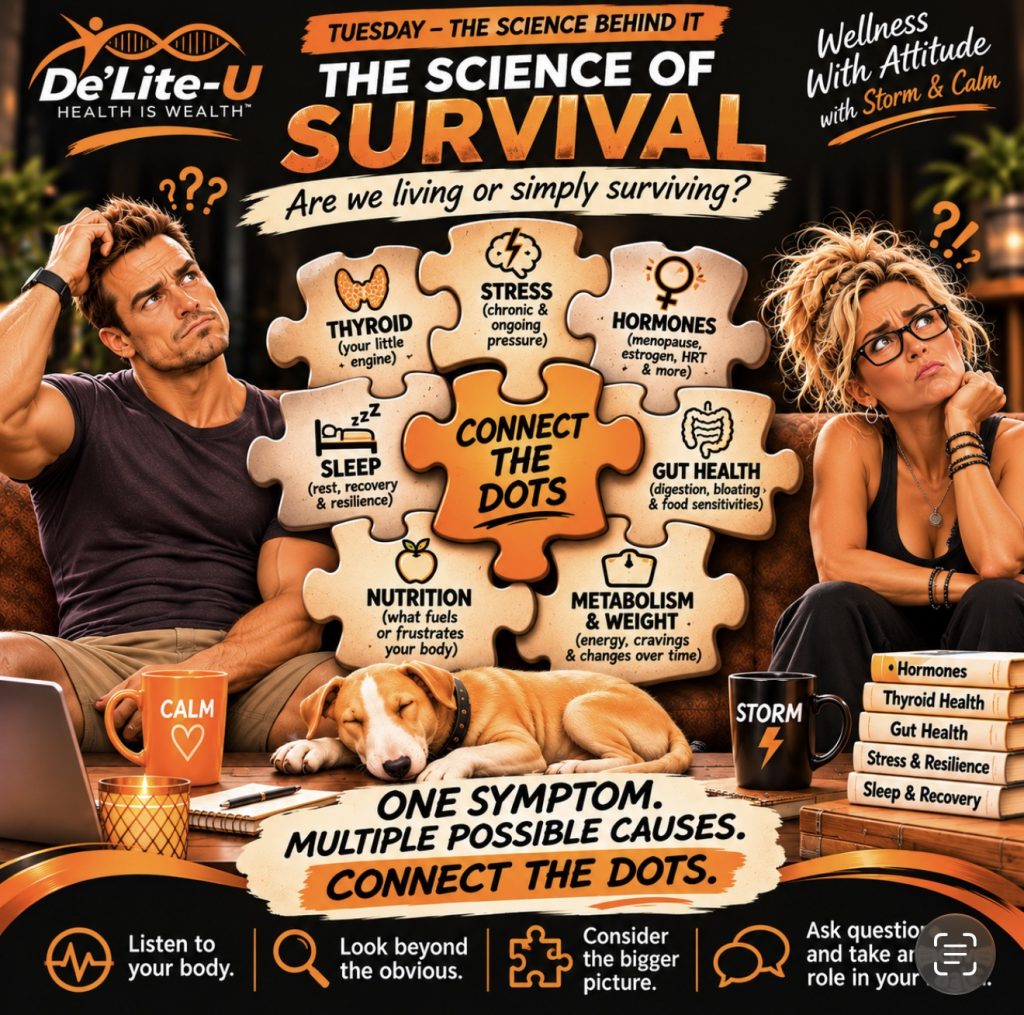
  • The Science of Survival — Are We Living or Simply Surviving?

    The Science of Survival — Are We Living or Simply Surviving?

    Wellness With Attitude | Tuesday — The Science Behind It

    17 November 2026

    When last did you genuinely feel like yourself?

    Not the version of yourself that gets up every morning, meets deadlines, pays bills, looks after everyone else and somehow gets through the day.

    The version of yourself that actually enjoys living.

    We often become so accustomed to functioning under pressure that we stop recognising the changes happening within us.

    But what happens when simply getting through the day becomes our new normal?

    1. Understanding the Science of Survival

    Stress is a natural biological response designed to help us adapt to challenges and potential threats.

    When we perceive a threat, our brain activates the sympathetic nervous system and the hypothalamic-pituitary-adrenal (HPA) axis.

    Two important hormones involved in this response are:

    • Adrenaline: Prepares us for immediate action by increasing heart rate and making energy available.
    • Cortisol: Supports energy regulation, metabolism, immune function and our adaptation to stress.

    Brilliant if we’re being chased by a lion.

    But today’s lions often look more like financial pressures, job insecurity, deadlines, family responsibilities, relationship difficulties and an overflowing inbox!

    When pressures become persistent and opportunities for recovery diminish, our mental and physical wellbeing can be affected.

    2. How Chronic Stress Can Affect Us

    Prolonged stress may influence several interconnected aspects of our health.

    Mental and emotional wellbeing

    • Irritability and emotional sensitivity
    • Anxiety and low mood
    • Difficulty concentrating
    • Reduced motivation

    Sleep and recovery

    • Difficulty falling or staying asleep
    • Feeling mentally alert despite physical exhaustion
    • Reduced ability to cope with everyday demands

    Metabolism and weight management

    • Changes in appetite and food cravings
    • Changes in activity levels and eating habits
    • Potential changes in metabolic regulation

    Digestive health

    • Abdominal discomfort and bloating
    • Changes in bowel habits
    • Altered appetite

    Physical wellbeing

    • Headaches and muscular tension
    • Changes in sexual desire
    • Increased cardiovascular health risks over time

    However, experiencing these symptoms does not automatically mean chronic stress is their underlying cause.

    3. Cortisol — Friend or Foe?

    Cortisol has become somewhat of a villain on social media.

    From stubborn belly fat to sleepless nights, it seems to receive the blame for almost everything!

    Yet cortisol is essential to human health.

    Its levels fluctuate naturally throughout the day. The timing and purpose of a cortisol test matter, and a single normal result cannot determine the full impact of psychological stress on our wellbeing.

    Similarly, weight gain cannot simply be attributed to elevated cortisol.

    A 2024 systematic review examining 32 studies found inconsistent evidence regarding the relationship between psychological stress, body composition and metabolic markers. Differences in research methods and study quality limit the conclusions we can draw.

    The relationship is considerably more complex than social media often suggests.

    4. From My Own Experience

    For me, it started with changes in my mood.

    What concerned me most was the intensity of my irritability and anger. I didn’t feel like myself, and my reactions were increasingly difficult to understand.

    Then came the unexpected weight gain, despite no significant changes in my eating habits or activity levels.

    My energy levels declined, my motivation disappeared, my digestive system seemed to have gone on strike, and my menopausal symptoms returned with a vengeance.

    Exhausted during the day, yet struggling to sleep at night.

    Even certain foods I’d previously enjoyed were becoming difficult to tolerate.

    Given the stress in my life, I wouldn’t have been surprised if my cortisol levels were elevated.

    Yet my cortisol results were normal.

    Rather than accepting that everything could simply be attributed to stress, I started examining the bigger picture.

    I paid closer attention to my daily experiences, researched possible connections and prepared questions for my doctor.

    Together, we revisited my medical history, compared previous blood results and explored whether thyroid function, hormonal changes, medication and other contributing factors could be involved.

    We agreed on an adjusted treatment plan, which we’re now monitoring.

    I don’t yet have all the answers, and I’m certainly not sharing a miracle recovery story.

    I’m sharing an ongoing journey of understanding my own health.

    5. One Symptom — Multiple Possible Causes

    Our bodies don’t operate in isolated compartments.

    Our endocrine, nervous, immune and digestive systems are interconnected. Changes in one area can sometimes influence another.

    Consider how some of the following factors may produce overlapping symptoms:

    Potential contributing factorExamples of possible symptoms
    Chronic stressIrritability, disrupted sleep, digestive discomfort
    Thyroid dysfunctionFatigue, constipation, weight changes
    Menopausal hormonal changesMood changes, hot flushes, poor sleep
    Sleep disruptionReduced concentration, fatigue, emotional sensitivity
    Mental health conditionsLoss of enjoyment, low motivation, anxiety
    Nutritional deficienciesFatigue, weakness, difficulty concentrating
    Digestive conditionsBloating, abdominal discomfort, altered bowel habits
    Medication effectsSymptoms that vary according to the medication and individual

    This is not a diagnostic checklist. It illustrates why investigating persistent symptoms requires a broader perspective.

    Sometimes more than one contributing factor is present.

    6. The Chicken or the Egg?

    Does stress cause us to sleep poorly, or does poor sleep make us less resilient to stress?

    Does digestive discomfort affect our emotional wellbeing, or does emotional distress influence our digestion?

    Can prolonged stress contribute to depression, and can depression make everyday pressures more difficult to manage?

    These relationships can work in both directions.

    Identifying a starting point isn’t always straightforward, and there may not be one single underlying cause.

    That’s why understanding patterns, changes and potential triggers can be more useful than focusing on one isolated symptom.

    7. You Are an Individual, Not a Statistic

    Science is an essential source of knowledge, but research findings must always be understood within context.

    Clinical research examines particular populations, methodologies, interventions and circumstances.

    It helps us understand potential benefits, risks and patterns of response. It cannot necessarily predict exactly how every individual will respond.

    One person may respond exceptionally well to a particular medication, whilst another experiences significant side effects.

    Two people may face similar life pressures yet experience very different physical and emotional responses.

    We are also constantly changing.

    Our age, hormones, environment, diet, financial circumstances, relationships, medical history and responsibilities evolve over time.

    Even food allergies can develop during adulthood, despite previous tolerance.

    What worked for us yesterday may not necessarily work for us today.

    This is why we should remain open to evolving scientific evidence, recognise research limitations and consider individual circumstances when making healthcare decisions.

    An unanswered scientific question is neither proof nor disproof of a particular theory. It is an opportunity for further investigation.

    8. Become an Informed Advocate for Your Health

    You know how your body normally feels.

    Your healthcare professional brings medical expertise to help investigate why that may have changed.

    Together, these perspectives can support more informed decisions.

    Start by:

    • Recognising changes in your physical and emotional wellbeing.
    • Keeping a journal of symptoms, potential triggers and daily experiences.
    • Reviewing changes in your lifestyle, circumstances and medication with your healthcare professional.
    • Preparing questions before medical appointments.
    • Asking for explanations of your results and what they mean in the context of your medical history.
    • Seeking a second opinion or specialist consultation when appropriate.
    • Discussing what you’re experiencing with your loved ones.

    Remain open to explanations you may not have considered.

    Seeking knowledge is not about diagnosing yourself or independently changing prescribed treatment. It’s about becoming an active participant in your healthcare.

    Persistent or worsening symptoms deserve medical attention. Severe abdominal pain, constipation accompanied by vomiting or an inability to pass wind, severe breathlessness or chest pain require urgent assessment.

    9. From Survival to Living

    On Thursday, we’ll move from understanding the science to practical everyday action.

    We’ll explore accessible ways to manage stress, recognise potential triggers, track symptoms and prepare for more meaningful conversations with healthcare professionals.

    No expensive wellness routines.

    No miracle promises.

    Just practical knowledge that can help us take more informed steps forward.

    Join the Conversation

    Have you ever felt that something wasn’t quite right, despite reassuring initial test results?

    What changes have you experienced that you struggled to understand?

    Talk about it. Ask questions. Share experiences where you feel comfortable.

    You may be surprised to discover that you’re not alone.

    Join the conversation on our De’Lite-U Facebook page.

    Listen to your body. Look beyond the obvious. Connect the dots.

    Scientific References & Further Reading

    1. Mayo Clinic — Chronic stress puts your health at risk.
      https://www.mayoclinic.org/healthy-lifestyle/stress-management/in-depth/stress/art-20046037
    2. National Institute of Mental Health — I’m So Stressed Out!
      https://www.nimh.nih.gov/health/publications/so-stressed-out-fact-sheet
    3. Rog J, Nowak K, Wingralek Z. (2024). The Relationship between Psychological Stress and Anthropometric, Biological Outcomes: A Systematic Review. Medicina, 60(8), 1253.
      https://doi.org/10.3390/medicina60081253
    4. NICE — Thyroid disease: assessment and management (NG145).
      https://www.nice.org.uk/guidance/ng145
    5. NICE — Menopause: identification and management (NG23).
      https://www.nice.org.uk/guidance/ng23
    6. Endocrine Society — Diagnosis of Cushing’s Syndrome: Clinical Practice Guideline.
      https://www.endocrine.org/clinical-practice-guidelines/diagnosis-of-cushing-syndrome
    7. National Institute of Diabetes and Digestive and Kidney Diseases — Symptoms and Causes of Constipation.
      https://www.niddk.nih.gov/health-information/digestive-diseases/constipation/symptoms-causes

    Authenticity is our personality.
    Integrity is our foundation.
    Knowledge is our offering.

    De’Lite-U | Health Is Wealth

    Reclaim Your Vitality. Reformatt Your Life.

    Where Science Meets Sovereignty.

    Real People. Real Struggles. Real Solutions. Genuine Hope.

    https://www.facebook.com/share/1Czz62b2Df/?mibextid=wwXIfr

    Disclaimer: This article is intended for educational and informational purposes and does not constitute medical advice. Personal experiences do not establish clinical evidence or guarantee similar outcomes. Always consult a qualified healthcare professional regarding persistent symptoms, investigations, medication changes or new supplement and wellness regimens.

  • Meet Storm & Calm

    Wellness With Attitude — Meet Storm & Calm

    Real Life. Real Wellness. A Little Attitude.

    Perfectly imperfect. Unapologetically human.

    She’s the storm. He’s the calm. Together? An ongoing experiment in chemistry, biology, physics and patience!

    Somewhere along the way, simply being human stopped feeling good enough.

    We’re surrounded by filters, unrealistic body standards, conflicting health advice and constant pressure to look better, earn more, achieve more and somehow age less.

    But what about REAL life?

    Financial pressures, hormonal rollercoasters, relationship challenges, sleepless nights and the seemingly elusive work-life balance.

    And somewhere in between, we’re supposed to exercise, eat healthily, meditate and remember to drink enough water!

    Navigating Life, Wellness & Each Other

    Through our cartoon alter egos, Storm & Calm, and our rather unperturbed four-legged companion, Ashie, we’ll bring a little humour to the everyday challenges of being human.

    In our day-to-day lives, we certainly don’t have all the answers. We make mistakes, have bad days, fabulous days and occasionally get things spectacularly wrong, whilst always trying to show gratitude.

    It’s the magic right around us that’s priceless!

    What We’ll Explore

    Wellness encompasses so much more than our physical appearance. It’s the relationship between our physical, mental, emotional and social wellbeing.

    Together, we’ll explore:

    • Mental health, chronic stress and survival mode
    • Hormonal health, menopause and male hormonal changes
    • Nutrition, gut health and the gut-brain connection
    • Fitness, strength, energy and recovery
    • Nutraceuticals, science and wellness innovations
    • Relationships, emotional wellbeing and human connection
    • Healthy ageing, body confidence and self-acceptance
    • Accessible and affordable everyday wellness

    We’ll ask uncomfortable questions, challenge misconceptions, separate facts from fads and explore practical, scientifically informed solutions.

    Our Commitment to You

    Authenticity is our personality.
    Integrity is our foundation.
    Knowledge is our offering.

    At De’Lite-U, we believe that informed decisions begin with credible information.

    Our wellness insights and awareness content will draw on scientific research, independent verification and established clinical guidance, with consideration for safety, accessibility and practical application.

    Where scientific evidence is still emerging or inconclusive, we’ll acknowledge it.

    Our personal experiences are exactly that — personal experiences, not promises of universal results.

    Join the Conversation

    Every week, we’ll explore a relatable wellness topic from three different perspectives:

    Sunday — The Reality Check
    A little humour with Storm & Calm, exploring the realities of everyday life.

    Tuesday — The Science Behind It
    Understanding the biology and science behind what we experience.

    Thursday — From Science to Real Life
    Exploring practical, accessible ways to apply that knowledge in our everyday lives.

    We also want to hear from you.

    What challenges are you navigating? What health and wellness topics would you like to understand better? What’s on your wish list that your reality list keeps getting in the way of?

    Join the conversation on our De’Lite-U Facebook page and help shape the topics we explore.

    Because knowledge empowers, and wellbeing shouldn’t be reserved for the fortunate few.

    Fall down seven times. Get up eight. Always remember to fall forward.

    Love my imperfections perfectly.

    Opposites attract. Hormones complicate. Humour helps.

    Real People. Real Struggles. Real Solutions. Genuine Hope.

    De’Lite-U | Health Is Wealth

    Reclaim Your Vitality. Reformatt Your Life.

    Where Science Meets Sovereignty.

    Disclaimer: The content shared on De’Lite-U is for educational and informational purposes only and does not constitute medical advice. Our proprietary nutraceuticals are currently in development ahead of our official launch. Always consult a qualified healthcare professional before starting any new supplement or wellness regimen.

  • The Journey Begins With Knowledge

    The Journey Begins With Knowledge

    Health Is Wealth. And understanding your health is where it all begins.

    At De’Lite-U, we’re building more than a collection of wellness products and services.

    We’re developing a health and wellness platform that brings together evidence-informed education, innovative non-invasive wellness solutions and thoughtfully formulated nutraceuticals.

    Our vision is simple: to make better health more accessible, understandable and achievable.

    As we work towards introducing our broader wellness offering in 2027, we believe there’s something equally valuable we can start sharing today.

    Knowledge. Awareness. And meaningful conversations about everyday health.

    Introducing Wellness With Attitude

    Real Life. Real Wellness. A Little Attitude.

    Health is serious business. But learning about it doesn’t have to be!

    Our new educational series brings a refreshingly relatable perspective to the health challenges that affect men and women across different stages of life.

    We’ll explore:

    • Hormonal health, metabolism and healthy ageing
    • Gut health, nutrition and the gut-brain connection
    • Stress, sleep, mood and mental wellbeing
    • Fitness, strength, performance and recovery
    • Everyday lifestyle habits and preventative health awareness

    Expect evidence-informed insights, practical wellness information, a little sarcasm and the occasional caricature that might look suspiciously familiar!

    No miracle promises. No unnecessary jargon. Just useful information that encourages curiosity, informed choices and healthier habits.

    What’s Coming Next?

    Alongside our wellness insights initiative, De’Lite-U continues developing its future portfolio of non-invasive wellness services and targeted nutraceutical formulations.

    Our approach places emphasis on ingredient quality, scientific evidence, responsible development and transparency.

    As these solutions progress through development and appropriate quality and regulatory processes, we’ll share further information.

    In the meantime, the conversation starts now.

    Join us on Facebook for our new wellness insights series, beginning Monday, 16 November 2026.

    Follow De’Lite-U on Facebook:
    https://www.facebook.com/share/1CJdxRcxMT/

    De’Lite-U | Health Is Wealth

    Real Life. Real Wellness. A Little Attitude.